Does Force Majeure Apply? Answering Questions About Contracts in the Time of Coronavirus
New ebook from ALM's Law Journal Press addresses clients' questions about the enforceability of contracts in the wake of COVID-19.
3 minute read August 01, 2020 at 12:02 AM
By
ljnstaff
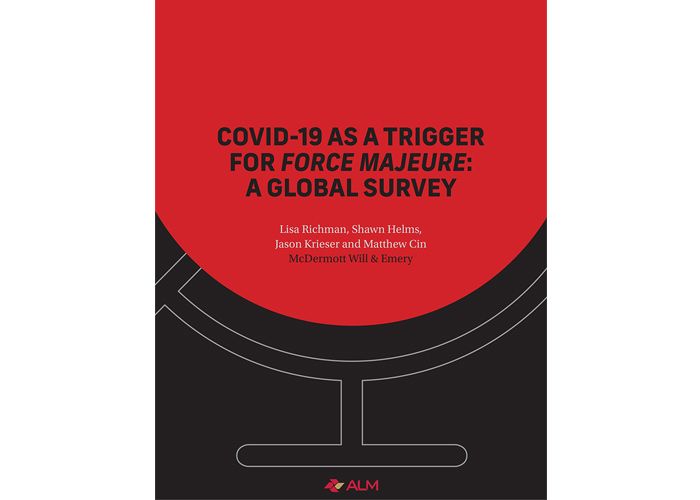
ALM's Law Journal Press announced the launch of a new ebook to address clients' questions about the enforceability of contracts in the wake of COVID-19. Design by Chelsea Fredlund, ALM Design
When New York's Metropolitan Opera was facing financial difficulties earlier this year, the opera's management decided to lay off all its union employees for the length of time that the opera would have to stay closed as a result of the coronavirus crisis.
This premium content is locked for LawJournalNewsletters subscribers only
ENJOY UNLIMITED ACCESS TO THE SINGLE SOURCE OF OBJECTIVE LEGAL ANALYSIS, PRACTICAL INSIGHTS, AND NEWS IN LawJournalNewsletters
Stay current on the latest information, rulings, regulations, and trends
Includes practical, must-have information on copyrights, royalties, AI, and more
Tap into expert guidance from top entertainment lawyers and experts
The Copyright Royalty Board (CRB), which works under the umbrella of the Librarian of Congress, sets statutory-license royalty terms and rates. The U.S. Courts of Appeals for the D.C. Circuit recently issued two notable decisions about the CRB.
As quantum machines become more powerful, today’s uncrackable encryption schemes may become trivial to break. Opinions vary as to how soon that moment, so-called “Q Day,” will arrive, but the threat is real.
How do you communicate when you know the harm before you know its cause? For law firms, it comes up both when advising a client and when explaining an incident of their own.
The gap between what a firm bills and what it collects is not a collections failure. It is a design flaw in how the whole revenue cycle is wired, and clients armed with AI are now exploiting it faster than firms can respond.








 ALM's Law Journal Press announced the launch of a new ebook to address clients' questions about the enforceability of contracts in the wake of COVID-19. Design by Chelsea Fredlund, ALM Design


