




The U.S. Court of Appeals for the Third Circuit has refined the contours of the Communications Decency Act, 47 U.S.C. Section 230.
In Anderson v. TikTok, Inc.

In Anderson v. TikTok, Inc., the Third Circuit held that the liability of an Internet Service Provider such as TikTok depended on whether TikTok was sharing content via the platform’s algorithm or engaged in something more. The question of whether TikTok’s recommendation algorithm transformed content into TikTok’s own expressive activity was not immunized by Section 230 and has disrupted the protection previously enjoyed by Internet platforms like TikTok.
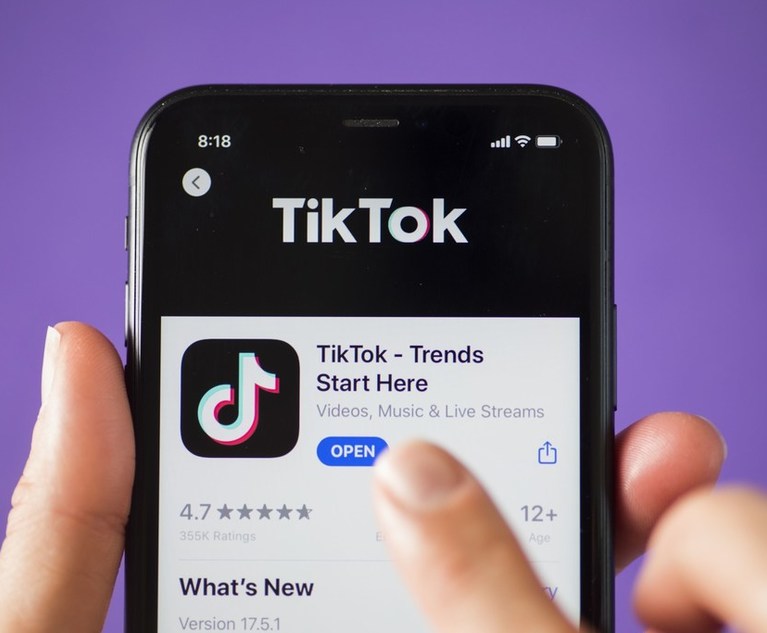
The U.S. Court of Appeals for the Third Circuit has refined the contours of the Communications Decency Act, 47 U.S.C. Section 230.
In Anderson v. TikTok, Inc.
ENJOY UNLIMITED ACCESS TO THE SINGLE SOURCE OF OBJECTIVE LEGAL ANALYSIS, PRACTICAL INSIGHTS, AND NEWS IN Cybersecurity Law & Strategy
Already have an account? Sign In Now
For enterprise-wide or corporate access, please contact Customer Service at [email protected] or call 1-877-256-2473.
NOT FOR REPRINT
© 2026 ALM Global, LLC, All Rights Reserved. Request academic re-use from www.copyright.com. All other uses, submit a request to [email protected]. For more information visit Asset & Logo Licensing.
The Copyright Royalty Board (CRB), which works under the umbrella of the Librarian of Congress, sets statutory-license royalty terms and rates. The U.S. Courts of Appeals for the D.C. Circuit recently issued two notable decisions about the CRB.
As quantum machines become more powerful, today’s uncrackable encryption schemes may become trivial to break. Opinions vary as to how soon that moment, so-called “Q Day,” will arrive, but the threat is real.
How do you communicate when you know the harm before you know its cause? For law firms, it comes up both when advising a client and when explaining an incident of their own.
The gap between what a firm bills and what it collects is not a collections failure. It is a design flaw in how the whole revenue cycle is wired, and clients armed with AI are now exploiting it faster than firms can respond.

© Copyright 2026 ALM Global, LLC trading as Centellic.
Advertise with Us Customer Support Terms of Service Privacy Policy


