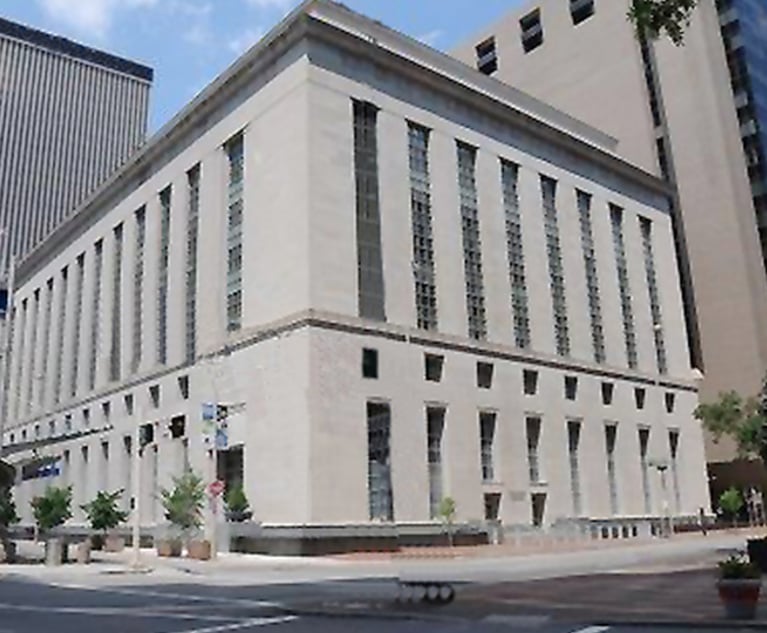
The U.S. Supreme Court is set to commence its term on October 6. Among the cases it will review are several appeals concerning copyright and trademark law. One notable case seeks to address procedural inconsistencies and claims of unconstitutional vagueness attributed to the U.S. Court of Appeals for the Federal Circuit.
- October 02, 2025Howard Shire and Di’Vennci Lucas
A federal judge in the Northern District of California granted preliminary approval to a $1.5 billion settlement between Anthropic and a class of book authors who alleged that the artificial intelligence company used their copyrighted works to train its chatbot Claude without their consent. The settlement is the largest copyright settlement of all time, covering 482,460 works and paying authors slightly more than $3,000 per work infringed.
September 30, 2025Michael GennaroA new lawsuit against Perplexity AI claims responses generated by the artificial intelligence platform violate the trademarks of Encyclopaedia Britannica and Merriam-Webster by attributing false information to their widely esteemed brands. The complaint alleges Perplexity’s generative AI “answer engine” violates the plaintiffs’ copyrights and also cites them as sources of false or incomplete information.
September 30, 2025Michelle MorganteA federal judge in the Northern District of California granted preliminary approval on September 25 to a $1.5 billion settlement between Anthropic and a class of authors who alleged that the artificial intelligence company used their copyrighted works to train its chatbot Claude without their consent. The settlement is the largest copyright settlement of all time, covering 482,460 works and paying authors slightly more than $3,000 per work infringed.
September 30, 2025Michael GennaroHow are copyright holders to prove their works were used to train AI models if the details about the vast data sets used for such training are kept secret? That’s a dilemma that surfaced in late August when a federal judge dismissed a claim of direct infringement raised by a group of authors.
August 31, 2025Michelle MorganteHow are copyright holders to prove their works were used to train AI models if the details about the vast data sets used for such training are kept secret? That dilemma surfaced when a California federal judge recently dismissed a claim of direct infringement raised by a group of authors.
August 31, 2025Michelle MorganteIn late July, two important decisions came down from courts in the Northern District of California regarding the unauthorized use of copyrighted material for the training of large language models. No real consensus has emerged as to the effect they will have on the broader AI litigation landscape.
August 01, 2025Stephen M. KramarskyThe Nashville federal court where the lawsuit was filed summarized the litigation as “concern[ing] the rights to a prolific composer’s music, a dizzying estate plan, and two descendants at odds over how to manage the royalties those compositions earn.”
July 31, 2025Stan SoocherWhile the EU AI Act certainly deserves compliments for both its pioneering nature and numerous thoughtful provisions aimed at the efficient and effective regulation of modern AI, it is not without its drawbacks.
July 31, 2025Ilia KolochenkoDenmark aims to make EU history by using copyright law — not privacy rules — to crack down on deepfakes and protect personal likenesses, diverging from the approaches adopted in the U.S. and other nations.
July 31, 2025Linda A. Thompson