Features

Elkan Abramowitz
&
Jonathan Sack
The financial and human cost on individuals of arguable “overcriminalization” is enormous, and defense counsel certainly wonder whether that damage can be justified in light of the ultimate legal outcomes of the white-collar dramas we witness.
Features

Matthew G. White
The continued, rapid advancement of artificial intelligence technologies comes with increasing risks for businesses, demanding that they navigate such issues more carefully than ever. Considering recent privacy class action trends detailed in this article, companies that utilize AI in their business operations should immediately review and modify their compliance programs as necessary to mitigate legal risk and liability exposure.
Features

Christopher P. Bussert
&
Jonathan E. Moskin
In August, the Federal Circuit issued a surprisingly self-critical ruling in the long-standing dispute between Erik Brunetti and the USPTO over Brunetti’s efforts to register the term F*CK for a wide variety of goods and services. The Federal Circuit concluded that the Board’s decision in In re Brunett lacked sufficient clarity and therefore vacated it for further proceedings, which although facially unremarkable, may not only prove to be a boon to Brunetti, it may also be highly beneficial to many trademark owners who have been forced to wrestle with failure-to-function refusals.
Features

Michael Gennaro
A federal judge in the Northern District of California granted preliminary approval on September 25 to a $1.5 billion settlement between Anthropic and a class of authors who alleged that the artificial intelligence company used their copyrighted works to train its chatbot Claude without their consent. The settlement is the largest copyright settlement of all time, covering 482,460 works and paying authors slightly more than $3,000 per work infringed.
Features

David J. Navetta
U.S. companies face a massive wave of wiretapping law class action lawsuits and regulatory enforcement actions over online “tracking technologies.” With this backdrop, the article below identifies some trends and new directions concerning tracking technology legal exposure and highlights some potential solutions for mitigating legal impact.
Features

Elizabeth Shuster
&
Anthony Tomusko
The landscape for discretionary denials at PTAB is evolving quickly; both patent challengers and owners must adapt their strategies to ensure they are not left behind by the USPTO’s new approach.
Features

Stan Soocher
An “agreement between lenders” (ABL) to help co-fund a film production is a common vehicle for sharing financial risk. But what happens when a legal dispute arises between a film-production senior lender who has provided a larger loan amount than a junior lender who has loaned less?
Features

Rob Maier
Many companies have been participating in the growing trend of challenging counterfeit products of their goods by filing “Schedule A” lawsuits. These suits are mass actions typically alleging intellectual property infringement and they allow plaintiffs to sue many defendants at once, with the defendants’ names grouped in a “Schedule A” appendix attached to the complaint.
Features
Michael Singer
&
Jeff Lieser
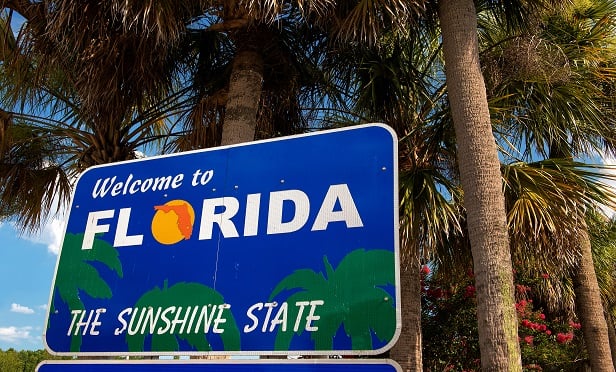
Florida House Bill 7031, eliminating the state’s sales tax on commercial real estate leases beginning Oct. 1, 2025. This long-awaited and sweeping reform ends Florida’s reign as the only state in the nation to impose such a tax and marks a sea change in the state’s commercial leasing landscape.
Features

Katherine Medianik
In today’s economic landscape, many businesses are turning to alternative financing models to access liquidity without disrupting operations. One such strategy — once a niche transaction type, now in the mainstream of real estate finance — is the sale-leaseback. This financial mechanism allows property owners to leverage real estate equity while continuing to occupy and operate their properties.
