




By Stephen M. Kramarsky
Say you’re a small technology company with a great idea for your clients, but you lack the in-house expertise to make it happen. There are a couple of ways you could try to move forward.

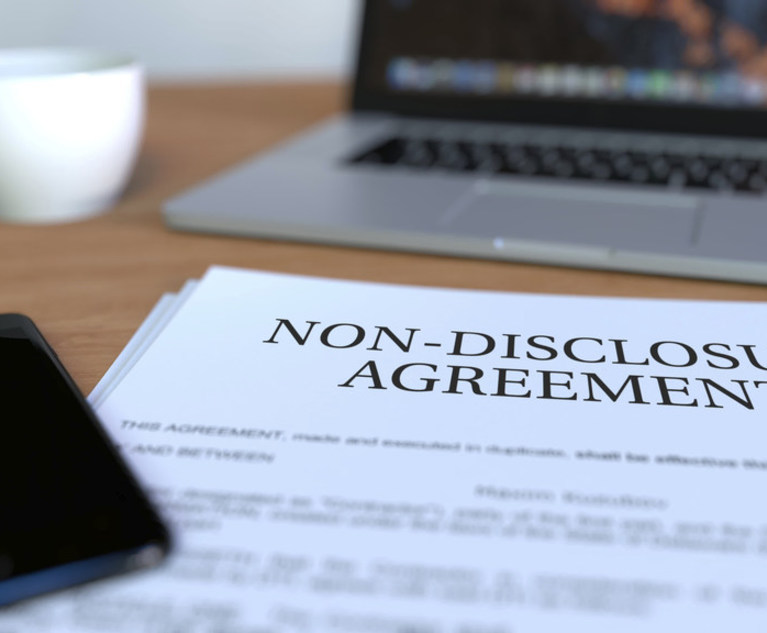
An NDA can cover information that would not qualify as a trade secret under state or federal law, and it can provide limited contractual protection to that information. But it is not a “magic talisman” for the protection of intellectual property, and it cannot create trade secret protection where it would not otherwise exist.
By Stephen M. Kramarsky
Say you’re a small technology company with a great idea for your clients, but you lack the in-house expertise to make it happen. There are a couple of ways you could try to move forward.
ENJOY UNLIMITED ACCESS TO THE SINGLE SOURCE OF OBJECTIVE LEGAL ANALYSIS, PRACTICAL INSIGHTS, AND NEWS IN The Intellectual Property Strategist
Already have an account? Sign In Now
For enterprise-wide or corporate access, please contact Customer Service at [email protected] or call 1-877-256-2473.
NOT FOR REPRINT
© 2026 ALM Global, LLC, All Rights Reserved. Request academic re-use from www.copyright.com. All other uses, submit a request to [email protected]. For more information visit Asset & Logo Licensing.
The Copyright Royalty Board (CRB), which works under the umbrella of the Librarian of Congress, sets statutory-license royalty terms and rates. The U.S. Courts of Appeals for the D.C. Circuit recently issued two notable decisions about the CRB.
As quantum machines become more powerful, today’s uncrackable encryption schemes may become trivial to break. Opinions vary as to how soon that moment, so-called “Q Day,” will arrive, but the threat is real.
How do you communicate when you know the harm before you know its cause? For law firms, it comes up both when advising a client and when explaining an incident of their own.
The gap between what a firm bills and what it collects is not a collections failure. It is a design flaw in how the whole revenue cycle is wired, and clients armed with AI are now exploiting it faster than firms can respond.

© Copyright 2026 ALM Global, LLC trading as Centellic.
Advertise with Us Customer Support Terms of Service Privacy Policy


