Account

Sign in to access your account and subscription

LJN Newsletters

  • In May, Matthew R. Galeotti, Head of the Criminal Division of the Department of Justice, issued a department-wide memorandum setting forth the department’s enforcement priorities in the white-collar crime sphere. In it, the department announced an effort to combat crime that “poses a significant threat to U.S. interests,” including the “enabling of shadow-banking and sanctions evasions by hostile nation-states and terror regimes.” A potential obstacle to these enforcement efforts is the doctrine of foreign sovereign immunity. This doctrine, as its name suggests, has been used by courts to grant judicial immunity to foreign states, their instrumentalities, and their respective heads of state.

    July 31, 2025Andrew St. Laurent and Joseph DeBlasi
  • In April 2025, the United Kingdom secured its first-ever criminal conviction for a breach of Russian sanctions — a milestone in the global enforcement landscape. But beneath the headline lies a far more pressing narrative: how a sanctioned Politically Exposed Person (PEP) was able to enter the UK, open a bank account, and launder funds through mainstream financial and non-financial institutions without detection.

    July 31, 2025Matt Winlaw
  • 35th Annual Entertainment Law Institute

    July 31, 2025Entertainment Law & Finance Staff
  • Liquidated Damages Provision Not Disproportionate to Probable Loss

    July 31, 2025New York Real Estate Law Reporter Staff
  • ALM teamed up with AI legal experts at McDermott Will & Emery to create a comprehensive treatise on all things AI and the law, covering the gamut of legal areas that AI touches, from the history of AI to its impact on intellectual property, employment law, data privacy, ethics, contracts, torts, risk mitigation, as well as gather all of the U.S. federal and state laws on AI as well as international laws and industry standards in one place.

    July 31, 2025Steve Salkin
  • On July 23, 2025, the Ninth Circuit issued a pivotal decision regarding digital art, blockchain technology, and trademark law. The ruling not only clarifies that non-fungible tokens (NFTs) are protectable “goods” under federal trademark law, but also sets important standards for how courts should analyze consumer confusion, fair use, and First Amendment protections surrounding artistic expression in the rapidly evolving NFT marketplace.

    July 31, 2025Howard Shire and Di’Vennci K. Lucas
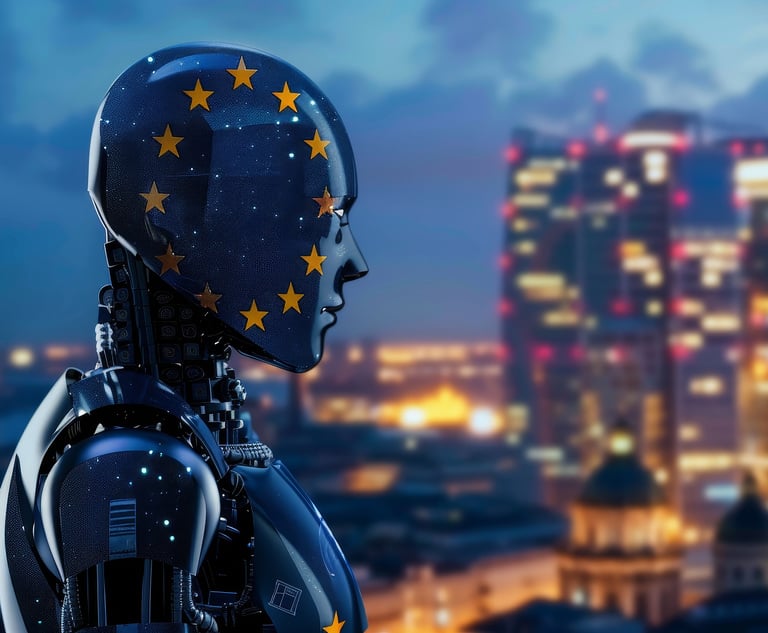
  • While the EU AI Act certainly deserves compliments for both its pioneering nature and numerous thoughtful provisions aimed at the efficient and effective regulation of modern AI, it is not without its drawbacks.

    July 31, 2025Ilia Kolochenko
  • In the months and years ahead, Search Engine Optimization, or SEO, will increasingly give way to AEO, Answer Engine Optimization. The latter focuses on helping AI-powered search engines understand and cite your content in their direct answers.

    July 31, 2025Andrew Longstreth and Kristofer Kirk