Features
SEC Halts Substantive Review of Public Company Requests to Exclude Certain Shareholder Proposals
A U.S. Securities and Exchange Commission decision to halt substantive review of public company requests to exclude certain shareholder proposals has investor groups concerned their voices will be diminished in U.S. corporate governance.
Features
The Emerging Regulatory Landscape of AI In the Hospitality Industry
This article surveys the emerging regulatory and legal AI landscape and consider steps the hospitality industry stakeholders can take to safeguard against potential exposure as they consider adopting AI tools to drive improved performance.
Features
Proposed Regulation Would Ban Money Laundering As Pretext for Policing Banks’ Reputational Risk
The Federal Deposit Insurance Corp. and the Office of the Comptroller of the Currency, in its proposed rule, said that the “broad nature” of BSA and anti-money laundering supervision creates “a risk that BS/AML focused supervisory actions could indirectly address reputation risk.”
Features
Colorado Attorney General’s Office Finalizes Latest Colorado Privacy Act Rulemaking
On Oct. 9, 2025, the Colorado attorney general’s (AG) office announced final revisions to the proposed draft amendments to the Colorado Privacy Act (CPA) rules. This article provides background on the rulemaking and provide an overview of the revisions.
Features
FCC Regulatory Issues in Today’s M&A Media World
We are in a frenzied time for merger and acquisition (M&A) activities for companies in the entertainment and communications industries. These are intricate endeavors, often involving fast-paced negotiations, complex due diligence and the navigation of multiple regulatory frameworks. Among these, compliance with FCC regulations represents a significant and frequently underestimated challenge in deals involving companies with FCC authorizations.
Features
Trends In Patent Policy and Enforcement
The patent world is at a moment of change. A tremendous amount of thought, financial investment, and political capital is being devoted to transforming patents into assets that are central to the economy, international trade, and national defense. The incentives for obtaining and aggressively monetizing patents are increasing. In contrast, defending a patent litigation is becoming more difficult and the stakes are higher. Companies that take steps now to navigate these changes may be rewarded with significant competitive advantages.
Features
Keeping Up With Shifting SEC Priorities
The best advice for SEC trend watchers might be summarized using the golf interjection, “fore!” The developments are happening so rapidly, one of the best things to do is to be aware that these shifts are incoming and stay alert to the changes.
Features
Impact and Cost of the ‘Overcriminalization’ of Individuals
The financial and human cost on individuals of arguable “overcriminalization” is enormous, and defense counsel certainly wonder whether that damage can be justified in light of the ultimate legal outcomes of the white-collar dramas we witness.
Features
Insights from Acting Director Stewart’s Decisions on Discretionary Denial under the New Interim Processes for PTAB Workload Management
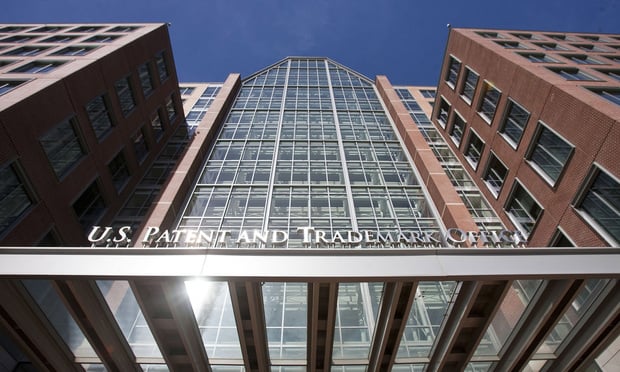
Just three months ago, Acting Director of the U.S. Patent and Trademark Office (USPTO) Coke Morgan Stewart rescinded existing guidelines governing the Patent Trial and Appeal Board’s (PTAB) discretion to deny petitions for inter partes review (IPR) and post-grant review (PGR) when parallel litigation is already pending in federal district court or the U.S. International Trade Commission (ITC). Acting Director Stewart replaced those guidelines with new interim processes that rely on the Director to issue decisions on patent owners’ requests for discretionary denials.
Features
When Sanctions Fail: The Ovsiannikov Case and Why Enhanced Due Diligence Must Become a Compliance Standard
As geopolitical tensions escalate and global sanctions regimes become more aggressive, the Ovsiannikov case serves as a stark warning: checkbox compliance is no longer sufficient. EDD must become the operational standard — not just in banking, but across every sector involved in high-risk transactions.
Need Help?
- Prefer an IP authenticated environment? Request a transition or call 800-756-8993.
- Need other assistance? email Customer Service or call 1-877-256-2472.
MOST POPULAR STORIES
- The DOJ's New Parameters for Evaluating Corporate Compliance ProgramsThe parameters set forth in the DOJ's memorandum have implications not only for the government's evaluation of compliance programs in the context of criminal charging decisions, but also for how defense counsel structure their conference-room advocacy seeking declinations or lesser sanctions in both criminal and civil investigations.Read More ›
- The DOJ's Corporate Enforcement Policy: One Year LaterThe DOJ's Criminal Division issued three declinations since the issuance of the revised CEP a year ago. Review of these cases gives insight into DOJ's implementation of the new policy in practice.Read More ›
- A Lawyer's System for Active ReadingActive reading comprises many daily tasks lawyers engage in, including highlighting, annotating, note taking, comparing and searching texts. It demands more than flipping or turning pages.Read More ›
- Use of Deferred Prosecution Agreements In White Collar InvestigationsThis article discusses the practical and policy reasons for the use of DPAs and NPAs in white-collar criminal investigations, and considers the NDAA's new reporting provision and its relationship with other efforts to enhance transparency in DOJ decision-making.Read More ›
- NY High Court Sides With Other State Courts: COVID-19 Business Interruption Not Enough to State Claim Under Commercial Property InsuranceMany businesses have sought to recover their pandemic losses under commercial property insurance policies, only to be denied coverage. A significant number of policyholders have filed lawsuits challenging these disclaimers, primarily in state courts. But to the dismay of the insureds, a growing majority of high state courts have sided with the insurers in these disputes.Read More ›