Features

Steve Salkin
ALM teamed up with AI legal experts at McDermott Will & Emery to create a comprehensive treatise on all things AI and the law, covering the gamut of legal areas that AI touches, from the history of AI to its impact on intellectual property, employment law, data privacy, ethics, contracts, torts, risk mitigation, as well as gather all of the U.S. federal and state laws on AI as well as international laws and industry standards in one place.
Features
Ilia Kolochenko
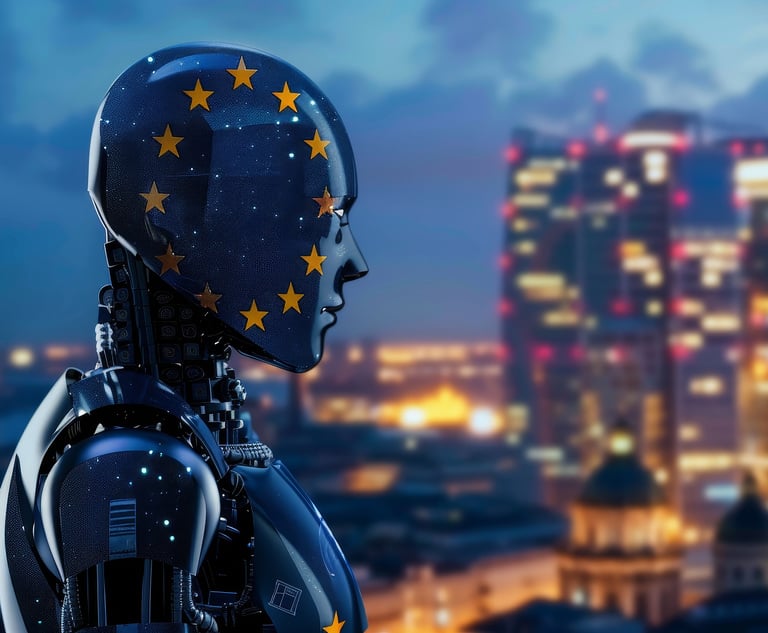
While the EU AI Act certainly deserves compliments for both its pioneering nature and numerous thoughtful provisions aimed at the efficient and effective regulation of modern AI, it is not without its drawbacks.
Features

Andrew Longstreth
&
Kristofer Kirk
In the months and years ahead, Search Engine Optimization, or SEO, will increasingly give way to AEO, Answer Engine Optimization. The latter focuses on helping AI-powered search engines understand and cite your content in their direct answers.
Features
Ilia Kolochenko
While the EU AI Act certainly deserves compliments for both its pioneering nature and numerous thoughtful provisions aimed at the efficient and effective regulation of modern AI, it is not without its drawbacks.
Features

Linda A. Thompson
Denmark aims to make EU history by using copyright law — not privacy rules — to crack down on deepfakes and protect personal likenesses, diverging from the approaches adopted in the U.S. and other nations.
Features

Jenny Bo
For attorneys, especially those working in and around state governments, where lobbying and practicing law often go hand-in-hand, the writing on the wall is clear: manual research and traditional legal software are not optimized for these tasks. This is why generative AI is starting to establish a presence in the legal and lobbying industries.
Features

Carl Taylor
The more we become commodities — and most legal marketers are happy to assist in this process — then the less we can charge our clients, the less we can match up with the right clients, and the easier we are to be replaced by AI. The old tricks that fooled Google will soon stop working.
Features

Michael Gennaro
A federal judge handed Meta a major win on June 24 in a closely watched copyright case over its use of books to train large language models, but the ruling stopped well short of giving tech companies blanket protection to scrape creative works for artificial intelligence.
Features

Ryan Griffin
&
David Cummings
A quick-service restaurant holding company’s plans to use artificial intelligence to enhance customers’ ordering experience is highlighting a new era of cyber liability risks. Data privacy concerns continue to drive lawsuits, and plaintiffs’ attorneys continue to seek creative ways to litigate privacy violations alongside rapidly evolving AI technologies, often bringing claims under laws that predate the internet itself.
Features

Jim Soong
While the case discussed in this article involved medical health technology, the implicated issues inform patent strategies for AI enabled inventions across all industries. Patent applicants should expect to see reliance by the Patent Office not only on its 2019 Guidance but also on its examples illustrating application of the guidance in the context of AI related innovation.
